If Capcom Remakes Resident Evil 1 on RE Engine, What Carries Over?
The remake pipeline is now well understood. The interesting question is which parts of the original do not survive translation.
Short answer
Capcom has not announced a Resident Evil 1 remake (often shortened to RE1 remake) on RE Engine. As of 4 October 2026 there is no reveal, no store listing and no Capcom statement that promises one. Everything below is analysis: what the existing remake pipeline could reuse if that call were ever made, and what a fixed-camera original cannot hand over.
Key points
- Not announced. Nothing in Capcom’s public record commits the company to a Resident Evil 1 remake on RE Engine.
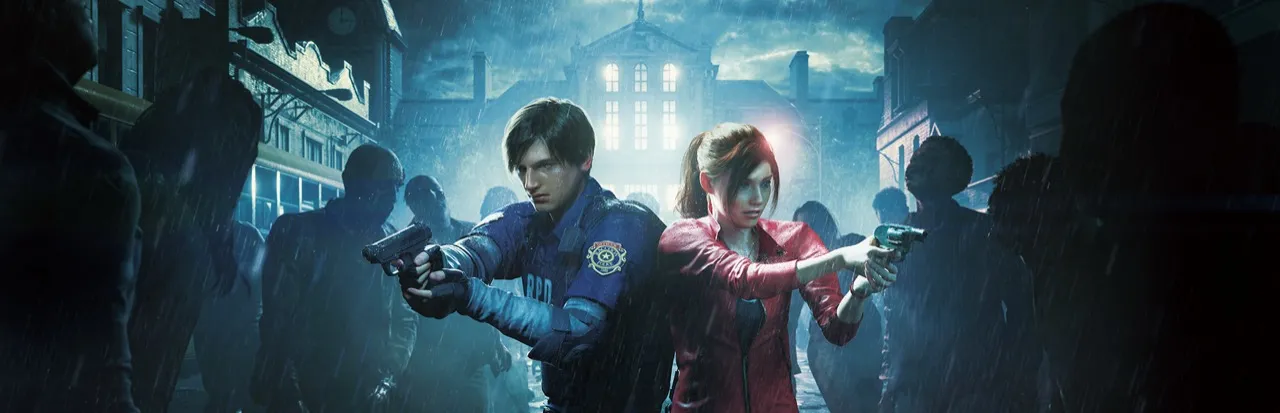
- The engine has already moved two fixed-camera originals to an over-the-shoulder view: the Resident Evil 2 remake (2019) and the Resident Evil 3 remake (2020).
- The Resident Evil 4 remake (2023) had less to solve, because the 2005 original already used an over-the-shoulder camera.
- A remake reuses tooling and production workflow, not the original’s pre-rendered backgrounds. Those have to be rebuilt as real 3D space.
- Confirmation would be a Capcom announcement, a store page or an age rating. Rumours are not evidence.
Capcom has not announced a Resident Evil 1 remake on RE Engine
Start with the plain fact, because speculation usually skips it: Capcom has not announced a Resident Evil 1 remake on RE Engine. Nothing in the public record as of 4 October 2026, including the RE:2026 keynote on 2 October, commits the company to making one. The remakes that do exist are Resident Evil 2 (2019), Resident Evil 3 (2020) and Resident Evil 4 (2023), all built on RE Engine. The explainer of what Capcom announced covers the rest of that keynote, which was about AI tooling rather than games.
Three remakes in a row is a pattern, not a plan. Capcom has not said the pattern extends to the first game, and there is a reason the arithmetic is different there. The original Resident Evil was already remade, for the GameCube in 2002, and Capcom has since re-released that version on later platforms rather than remaking it again. A new Resident Evil 1 project would be a remake of a remake, which makes it a different design problem from the three that exist.
What the remake pipeline would reuse

The parts that would carry over are the least visible ones. RE Engine itself, still the engine behind every remake since 2019. The photogrammetry-led asset workflow the teams have used to rebuild interiors, streets and characters as scanned surfaces. The accumulated tooling for character animation, materials and real-time lighting. None of that is specific to any one Resident Evil game; it is studio infrastructure, and it survives a change of title.
The camera problem is also solved, twice over. Resident Evil 2 (2019) and Resident Evil 3 (2020) each took a fixed-camera original and rebuilt it as an over-the-shoulder game on the same engine, and Village ships with first-person and third-person views in the same product. A team asking how a mansion-scale space behaves without fixed angles can point at shipped code rather than theory.
Reuse is the whole advantage a remake holds over a new property. A title such as Pragmata has to author its libraries from nothing; a remake starts from a design that has already shipped once, which is why production is cheaper and why the pipeline matters more than the technology.
What a fixed-camera original cannot hand over
The original game rendered its rooms as pre-rendered background plates behind fixed camera angles. Those plates are pictures, not geometry. A pipeline that lights real 3D rooms cannot load them as environments, so a remake rebuilds the space and relights it, and the rooms look different even when the floor plan is faithful.
The design travels even less cleanly than the geometry. A fixed camera hides things: it let the original place items, enemies and scares in the player’s blind spots, and it made the cut between two views part of the pacing. Tank controls, which move the character relative to itself rather than the camera, existed because of that camera. Remove the fixed angle and all of those decisions have to be re-derived rather than copied. The same applies to the door transitions between rooms, which covered loading and gave the game its rhythm.
There is a further wrinkle. The 2002 remake worked within the same fixed-camera tradition, and it was built for hardware where pre-rendered backgrounds were normal. A new version would be reinterpreting that design as much as the 1996 original, which makes the word “faithful” harder to pin down. That is our framing, not a Capcom position.
The precedent from Resident Evil 2, 3 and 4
| Remake | Original camera | Remake camera | What it settled |
|---|---|---|---|
| Resident Evil 2 (2019) | Fixed | Over-the-shoulder | Pre-rendered rooms can become real-time space. |
| Resident Evil 3 (2020) | Fixed | Over-the-shoulder | The same rebuilding approach repeats. |
| Resident Evil 4 (2023) | Over-the-shoulder | Over-the-shoulder | No camera translation was needed at all. |
Two of the three are direct precedents for a fixed-camera game, and the third is a useful control case: when the original already used an over-the-shoulder camera, the remake’s work sat in content and systems rather than in translation. What the table cannot show is intent. Three remakes do not add up to a commitment, and Capcom has described no plan that includes the first game. For the wider list, including what each RE Engine title added to the engine, see the games built on RE Engine.
What would count as confirmation
Because this page is analysis, it is worth stating the standard that would end the analysis. We would treat as confirmation a Capcom announcement on Capcom’s own channels or at a Capcom event, a store page or an age rating that lists the title, or a mention in Capcom’s investor materials. We would not treat as confirmation an unnamed source, a logo on a forum or aggregator posts recycling one another. Our evidence tiers set out the difference between announced, trialled and shipped.
What remains unknown is straightforward: whether Capcom intends to remake Resident Evil 1 at all, whether any such project exists, which team would make it, and whether the REX Project tooling announced on 2 October 2026 would be part of it. The REX work is engine tooling, and tooling says nothing about which games get greenlit. If Capcom announces something, this page will be rewritten the same day, with the source and the date attached.
Has Capcom said anything about an RE1 remake?
No. Nothing in Capcom’s public statements or conference materials concerns a Resident Evil 1 remake. Anything you read describing one as in development, confirmed or dated is not supported by anything Capcom has published.
Has Capcom announced a Resident Evil 1 remake on RE Engine?
No. As of 4 October 2026, Capcom has not announced a Resident Evil 1 remake on RE Engine or on any other engine. The remakes that exist are Resident Evil 2 (2019), Resident Evil 3 (2020) and Resident Evil 4 (2023).
Why do people expect one?
Because Capcom remade three Resident Evil games in a row on RE Engine. That is a pattern rather than an announced plan, and it skipped the first game, which was already remade for the GameCube in 2002 and re-released since.
What could a remake reuse from the earlier games?
Engine tooling and production workflow: the photogrammetry-led asset pipeline, animation and material tooling, and the team’s experience of moving a fixed-camera game to an over-the-shoulder view. It could not reuse pre-rendered backgrounds, which would be rebuilt as real 3D spaces.
Would a remake keep the fixed camera?
Capcom has not discussed it, so nobody outside the company knows. The strongest precedent is that both fixed-camera remakes it has shipped moved to an over-the-shoulder view. That is a precedent, not a promise.